About Ammonia testing
Ammonia (NH3) is the most toxic nitrogenous waste in your aquarium which is created by the inhabitants of your tank (both fish and plant life) and is capable of quickly killing or seriously harming fish. This naturally occurring compound is often misunderstood which can lead to misdiagnosis with catastrophic results. Having a better understanding of the Nitrogen Cycle and how ammonia is created in your aquarium is key for avoiding fish loss and for maintaining a healthy marine environment.
There are two forms of ammonia, unionised ammonia (NH3) which is toxic to fish and ionised ammonium (NH4+) which is non-toxic, together these are referred to as
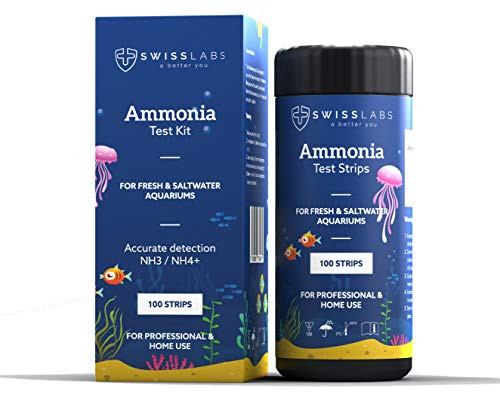
Total Ammonia Nitrogen (TAN). Ammonia can quickly become a problem if it remains untreated, particularly in new aquariums. Therefore, it is highly recommended that you test your aquarium water for ammonia at least fortnightly and promptly treat any harmful conditions to ensure that marine life remain healthy. About kit This kit contains 100 reagent test strips specifically developed by Swiss Labs to detect Ammonia Nitrogen (NH3/NH4+) in both fresh and saltwater aquariums. These sensitive test strips chemically react when they come into contact with ammonia in water (> 0.5 ppm). This test kit has been designed for ease of use providing accurate results within 30 seconds. A colour chart and comprehensive user guide are included which provide additional key information about testing and interpreting results. How to use this kit Simply dip the test strip into your aquarium water and within 30 seconds the strip will react (change colour) if ammonia is present. Compare results to the colour chart to determine the amount of Total Ammonia Nitrogen (TAN) that is present. It is highly recommended that you also test for water temperature and pH levels, refer to user guide provided for further information on testing.

Swiss Labs Ammonia Test Kit for Fresh and Saltwater Aquariums- 100 Strips Pack- and Easy to Use for Fast and Accurate Results
Was:
$75.80
Now:
$37.90
(No reviews yet)
Write a Review
Write a Review
Swiss Labs Ammonia Test Kit for Fresh and Saltwater Aquariums- 100 Strips Pack- and Easy to Use for Fast and Accurate Results
- SKU:
- ZS321765
- UPC:
- 5060589780064
- Condition:
- New
- Availability:
- Free Shipping from the USA. Estimated 2-4 days delivery.