

Common Name: staghorn sumac (116 seeds per gram Type: Deciduous shrub) Family: Anacardiaceae Native Range: Eastern North America Zone: 3 to 8 Rhus typhina, commonly called staghorn sumac, is the largest of the North American sumacs. It is native to woodland edges, roadsides, railroad embankments and stream/swamp margins from Quebec to Ontario to Minnesota south to Georgia, Indiana and Iowa. This is an open, spreading shrub (sometimes a small tree) that typically grows 15-25 tall. The sumac (Rhus spp.) gets around. Fast-growing, pest- and disease-free and drought tolerant, it is the only shrub found in all 48 contiguous states. Sumac are scrappy North American natives, growing in U.S. Department of Agriculture plant hardiness zones 3 though 9. They spread by root suckers in almost any well-draining soil and can stabilize problem embankments. Their leaves turn red in the fall, matching their showy fruiting clusters. Some varieties like smooth sumac (Rhus glabra) grow to 20 feet tall, while others like fragrant sumac (Rhus aromatica) stay low and rambling. All of the sumac species are tough and hardy. 1 Harvest seeds from sumac fruiting clusters in autumn when they are dark brown and dry. 2 Boil water in a pot, then remove the pot from the stove and toss in the seeds. Leave them in the cooling water for 24 hours to remove germination inhibitors. 3 Drain and dry seeds on a paper towel. Place them in the refrigerator for 30 days at a temperature of about 41 degrees Fahrenheit. 4 Plant sumac seeds directly outside in autumn. Select a spot in sun or partial sun with well-draining soil. Plant each seed at a depth of 1/3 to 3/4 inches, about 8 inches apart. Water well after planting. Sumacs will grow in any soil, including dry wastelands. 5 Water your sumacs regularly the first two seasons. Starting with the third season, limit irrigation to dry, hot periods. No fertilizer is necessary for these vigorous, suckering shrubs. Within several seasons, each parent plant will ...

Rhus typhina Staghorn Sumac 500 Seeds
Was:
$80.08
Now:
$40.04
- SKU:
- ZY103947
- Condition:
- New
- Availability:
- Free Shipping from the USA. Estimated 2-4 days delivery.

50 STAGHORN SUMAC TREE Rhus Typhina Yellow Flowers Red Berries Seeds
Was:
$65.06
Now:
$32.53

Staghorn Sumac Tree Rhus Typhina Yellow Flowers Red Berries jocad -50 Seeds-
Was:
$68.30
Now:
$34.15

RubyShop724 Staghorn Sumac T-r-ee S-e-EDS -Rhus typhina- 40 plusS-e-EDS
Was:
$94.88
Now:
$47.44
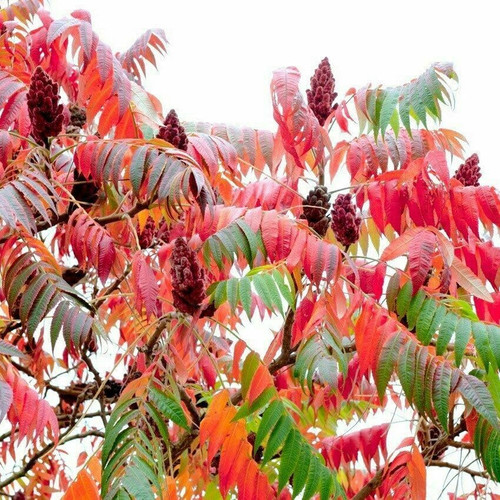
Sumac Tree Rhus Typhina Plant 1 to 2 Feet
Was:
$133.86
Now:
$66.93

75 Smooth Sumac Tree Red Berries Rhus Glabra Borealis Seeds
Was:
$75.06
Now:
$37.53