
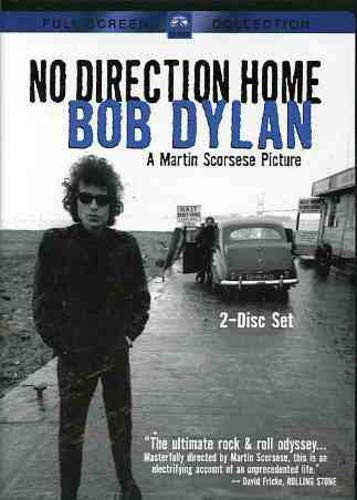
Product Description
The two-part film includes never-seen performance footage and interviews with artists and musicians whose lives intertwined with Dylans during that time. For the first time on camera, Dylan talks openly and extensively about this critical period in his career.
Amazon.com
It's virtually impossible to approach
No Direction Home without a cluster of fixed ideas. Who doesn't have their own private Dylan? The true excellence of Martin Scorsese's achievement lies in how his documentary shakes us free of our comfortable assumptions. In the process, it plays out on several levels at once, each taking shape as an unfailingly fascinating narrative. There is, of course, the central story of an individual genius staking out his artistic identity. But along with this
Bildungsroman come other threads and contexts: most notably, the role of popular culture in postwar America, art's self-reliance versus its social responsibilities, and fans' complicity with the publicity machine in sustaining myths. All of these threads reinforce each other, together weaving the film's intricate texture.
Scorsese's 200-plus-minute focus on Dylan's earliest years allows for a portrayal of unprecedented depth, with multiple angles: a rich composite photo is the result. The main narrative has an epic quality: it moves from Dylan growing up in cold-war Minnesota through Greenwich Village coffeehouses and the Newport Folk Festival, climaxing in the controversial 1966 U.K. tour that crowned a period of unbridled and explosive creativity. In his transition from Robert Allen Zimmerman to Bob Dylan, we observe him concocting his impossible-to-describe, unique combination of the topical with the archaic, like an ancient oracle. Scorsese was able to access previously unseen footage from the Dylan archives, including performances, press conferences, and recording sessions. He also uses interviews with Dylan's friends, ex-friends, and fellow artists, and, intriguingly, with the notoriously reclusive Dylan himself (who looks back to provide glosses on the early years), fusing what could have turned into a tiresome series of digressions and tangents into a powerful whole as enlightening, eccentric, contradictory, and ultimately irreducible as its subject.
Some of the deeply personal bits remain unrevealed, but Dylan's preternatural self-assurance acquires a slightly self-deprec

Bob Dylan - No Direction Home
Was:
$94.90
Now:
$47.45
- SKU:
- W523322
- UPC:
- 097360310542
- Condition:
- New
- Availability:
- Free Shipping from the USA. Estimated 2-4 days delivery.
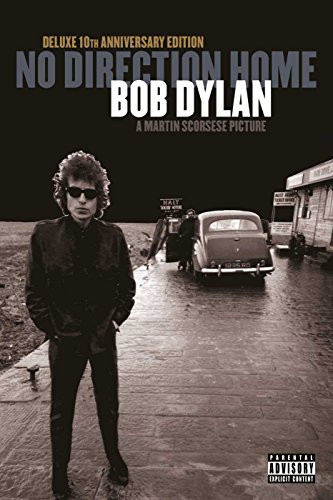
No Direction Home Bob Dylan
Was:
$117.70
Now:
$58.85

No Direction Home Bob Dylan Documentary -Blu-ray-
Was:
$104.40
Now:
$52.20


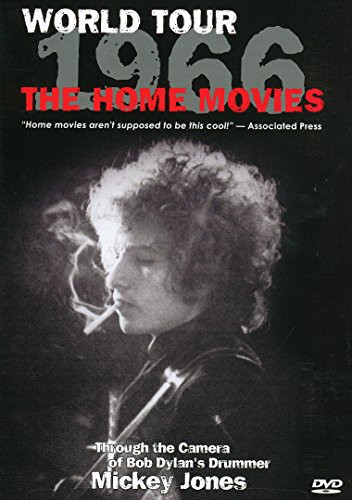
Bob Dylan - World Tour 1966 The Home Movies
Was:
$67.76
Now:
$33.88