

STEMMA plug-and-play parts make your next project soldering-free! This is the STEMMA Non-Latching Mini Relay. It gives you power to control, and control over power. Put simply, you can now turn on and off lamps, fans, solenoids, and other small appliances that run on up to 250VAC or DC power using any microcontroller or microcomputer, with ease. No worrying about flyback diodes, level shifting, pin protection. The STEMMA board takes care of all that for you. You can use it with any 3V or 5V microcontroller/microcomputer. To use with a breadboard, Raspberry Pi or Arduino, pair with a JST 3-pin to breadboard cable. If you want to use with a Circuit Playground or micro:bit, we have a cable with alligator clips. This board has a single Signal pin (the white wire). Normally, the relay's COM pin is connected mechanically to the NC pin and the NO pin is disconnected. When the Signal pin is pulled high, the relay switches and the internal switch changes so that the COM pin is mechanically connected to the NO pin and NC is then disconnected When the relay is active, a red LED is lit, and about 50mA of current from the red power wire is used to keep the coil switched on. Note, if power is lost, the relay will go back 'open'. The connects for the relay are the white tubular thing at the far end of the PCB. You can poke wire into the holes, they will automatically grip onto wire that is 24AWG to 18AWG. Once you poke the wire in, give it a light pull to verify its clamped. To release the wire, use a thin screwdriver or pen to press on the button on the top while pulling the wire out. You can switch up to 2A of resistive current at 30VDC or ~40VAC or lower. At 110VDC you can switch up to 0.3A, at 120VAC up to 0.5A, and at 250VAC you can switch up to 0.6A. Check the datasheet for the relay for the exact switching capacity, and of course, for reactive/inductive loads you will need to de-rate.

Adafruit 4409 Stemma Non-Latching Mini Relay
Was:
$75.88
Now:
$37.94
- SKU:
- RTW134515
- Condition:
- New
- Availability:
- Free Shipping from the USA. Estimated 2-4 days delivery.
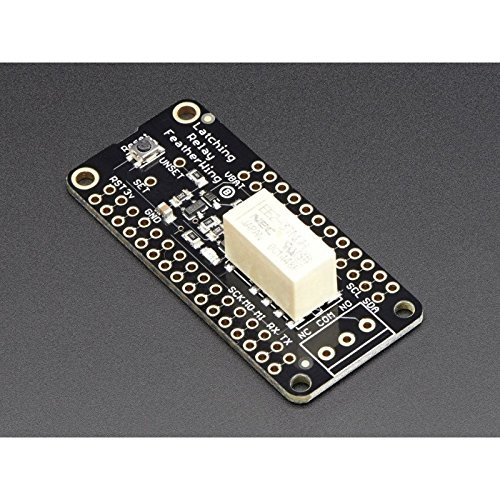
Adafruit Accessories Adafruit Latching Mini Relay FeatherWing 1 piece
Was:
$68.56
Now:
$34.28
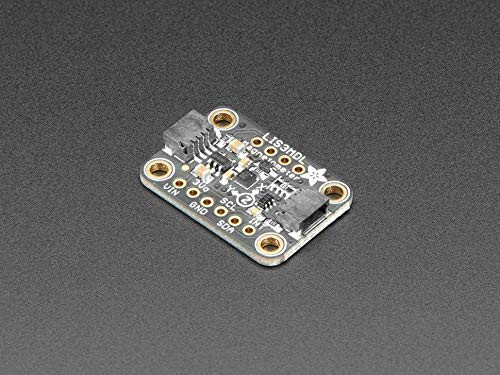
Adafruit 4479 Adafruit Triple-axis Magnetometer - LIS3MDL - Stemma QT Qwiic
Was:
$78.04
Now:
$39.02

Adafruit 3885 Stemma Speaker - Plug and Play Audio Amplifier
Was:
$79.30
Now:
$39.65

Adafruit Wii Nunchuck Breakout Adapter - Qwiic/Stemma QT
Was:
$69.80
Now:
$34.90
