
At the beginning of the 20th century, at a time when Great Britain was the world's preeminent superpower, and its capital London was the hub of the world's political and economic activity; due to the rapid pace of urbanization of large cities, the challenge of transporting groups of people with a completely new means of transport had arisen, as traditional horse-drawn carriages (the so-called "cabby") could no longer cope with such a task in its entirety. Thus, a fundamentally new kind of transport appeared - the "omnibus", or bus in the modern form of the word. Already in 1910, the LGOC (London General Omnibus Company) was established, soon occupying a dominant position in the field of transportation. Already in 1911, at his request, designer Frank Searle sketched out the design of a vehicle, which for many years was to become the "business card" of the city on the Thames. It was a twostory bus with stairs between the floors, which enabled a significant reduction in the size of the vehicle while still able to transport a large group of people. The new bus was named "Type B" and was exploited with significant commercial success in subsequent years. The First World War, which broke out in the summer of 1914, immediately gained momentum, forcing a search for a means to rapidly move large groups of soldiers as close as possible to the points of contact with the enemy. The military leadership immediately became interested in the possibility of using omnibuses, and soon the first Type B vehicles had been delivered into military service. In total, from October 1914 to March 1915, 300 Type B buses were requisitioned, which were forced to exchange the streets of London for the shell-cratered terrain of France.

Type B Omnibus Ole Bill Passenger WWI 1-72 Scale Plastic Model Kit Roden 732
Was:
$146.40
Now:
$73.20
(No reviews yet)
Write a Review

Write a Review
Type B Omnibus Ole Bill Passenger WWI 1-72 Scale Plastic Model Kit Roden 732
- SKU:
- ZA1181232
- UPC:
- 40835076528
- Condition:
- New
- Availability:
- Free Shipping from the USA. Estimated 2-4 days delivery.

Roden 732 Type B Omnibus Ole Bill 172 Scale Plastic Model kit
Was:
$103.88
Now:
$51.94

Roden 737 _ 1 72 _ Type B WWI Bus Pigeon Loft. Scale Plastic Model
Was:
$103.88
Now:
$51.94
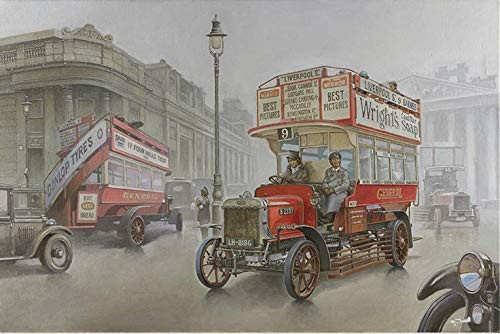
Roden 739 _ 1 72 _ Type B Bus LGOC_ London General Omnibus Company_ Scale Model
Was:
$75.88
Now:
$37.94

FWD Model B-ton Lorry 3-ton Truck WWI 1 72 Scale Plastic Model Kit Roden 733
Was:
$88.86
Now:
$44.43

Opel Blitz Omnibus W39 German Bus WWII 1/72 Scale Plastic Model Kit Roden 726
Was:
$90.84
Now:
$45.42