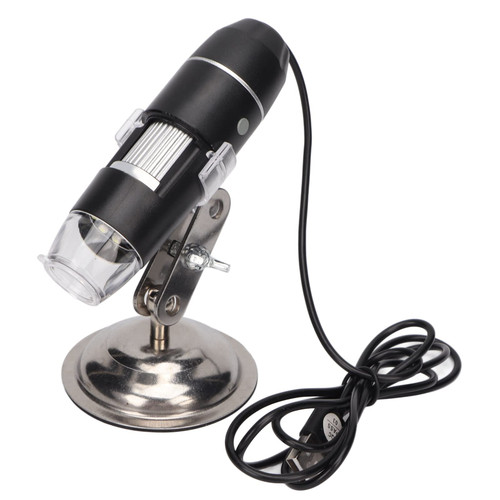
Spec:
Item Type: Skin hair scalp detector
Material: ABS
Photosensitive Chip: Imported high definition color CMOS
Image Resolution: standard 640×480, maximum 1600×1200 (2M)
Focal Length: Approx. manually adjustable, 8mm / 0.3in to infinity (except for the special model 1600x with only 8mm focal length).
Magnification: 0-800X
Interface Support: USB 3.0, USB 2.0, USB 1.1.
Supported Systems: For Windows XP, for Vista, 7, 8, 10 32 bit and 64 bit.
Light Chips: 8pcs
How to Use:
1. Download the camera tool software to the computer;
2. Connect this product to the computer USB interface;
3. Open the camera tool software, click Equipment and select this product as the observation camera;
4. Take photos, videos, check and other operations;
5. Aim the lens of this product at the measured object, and slowly adjust the wheel manually until you see a clear image.
Package List:
1 x Skin Hair Scalp Detector
1 x Bracket
1 x CD
1 x Micro USB interface
1 x Type c interface
1 x Correcting ruler
Notice:
Safety warnings and precautions:
1. Do not disassemble this product by yourself to avoid electrostatic breakdown of accurate chips.
2. Do not use organic solvents to clean products.
3. Don't touch the lens with your fingers to avoid scratches and dirt on the surface.
4. When outdoor use, avoid high temperature and high humidity environment to prevent short circuit of electronic devices. This product does not have waterproof function, so please avoid getting wet in the rain and water.
5. If foreign matter or water, liquid enters the product carelessly, please unplug the USB cable first and send it to the maintenance center for repair. Do not handle it yourself.
6. Different distances between the lens of this product and the measured object will result in different magnifications.
Item Type: Skin hair scalp detector
Material: ABS
Photosensitive Chip: Imported high definition color CMOS
Image Resolution: standard 640×480, maximum 1600×1200 (2M)
Focal Length: Approx. manually adjustable, 8mm / 0.3in to infinity (except for the special model 1600x with only 8mm focal length).
Magnification: 0-800X
Interface Support: USB 3.0, USB 2.0, USB 1.1.
Supported Systems: For Windows XP, for Vista, 7, 8, 10 32 bit and 64 bit.
Light Chips: 8pcs
How to Use:
1. Download the camera tool software to the computer;
2. Connect this product to the computer USB interface;
3. Open the camera tool software, click Equipment and select this product as the observation camera;
4. Take photos, videos, check and other operations;
5. Aim the lens of this product at the measured object, and slowly adjust the wheel manually until you see a clear image.
Package List:
1 x Skin Hair Scalp Detector
1 x Bracket
1 x CD
1 x Micro USB interface
1 x Type c interface
1 x Correcting ruler
Notice:
Safety warnings and precautions:
1. Do not disassemble this product by yourself to avoid electrostatic breakdown of accurate chips.
2. Do not use organic solvents to clean products.
3. Don't touch the lens with your fingers to avoid scratches and dirt on the surface.
4. When outdoor use, avoid high temperature and high humidity environment to prevent short circuit of electronic devices. This product does not have waterproof function, so please avoid getting wet in the rain and water.
5. If foreign matter or water, liquid enters the product carelessly, please unplug the USB cable first and send it to the maintenance center for repair. Do not handle it yourself.
6. Different distances between the lens of this product and the measured object will result in different magnifications.