
With the magnificent de Havilland Mosquito only just entering Royal Air Force service towards the end of 1941, designers at the company were next asked to turn their attentions to developing a new jet engine, one which was capable of powering a new generation of high speed fighter aircraft. Entrusted to engine designer Frank Halford, he was determined that his engine would be less complicated and of simpler design than the one being developed by his rival, Frank Whittle and he was ready to test his engine by April 1942. Showing great promise and producing the intended level of thrust, the only thing to do now was to see how it performed in the air. At a time when jet engine technology was still in its infancy and these early engines were both a little lacking in power and slow to respond to power input commands, de Havilland's decision to produce their first jet aircraft as a single engined design was a brave one and placed great faith in the performance of their new jet engine. The diminutive new aircraft was initially designated de Havilland DH.100 'Spider Crab', with this codename used to mask the secret nature of the aircraft's development. Constructed around the new de Havilland Goblin 1 turbojet, the aircraft featured a relatively short, egg shaped central fuselage nacelle and employed a unique twin-boom tail configuration for control stability which allowed the engine thrust to egress directly from the central fuselage. With a requirement to take the pressure off the wartime aviation industry, this experimental aircraft had to be constructed of both wood and metal and it is interesting to note that the majority of the fuselage employed the same laminated plywood construction the company had perfected during Mosquito production. Unfortunately for the de Havilland team working on the new jet, their Mosquito was proving to be such a war winner that this experimental project was deemed of lesser importance than producing Mosquitos, probably rightly so for Britain's war effort. To rub salt into this aviation wound, the first flight of the aircraft would be further delayed for an unbelievable reason - the only serviceable jet engine was ordered to be sent to America to help with the advancement of their own jet powered project. Mosquito production priority and a series of unforeseen delays eventually dictated that the Gloster Meteor's development outpaced that of its de Havilland competitor, with the Meteor taking the honor of being Britain's first jet ai

Airfix de Havilland Vampire F.3 1:48 Royal Airforce Military Aviation Plastic Model Kit A06107
Was:
$143.82
Now:
$71.91
(No reviews yet)
Write a Review

Write a Review
Airfix de Havilland Vampire F.3 1:48 Royal Airforce Military Aviation Plastic Model Kit A06107
- SKU:
- ZDS499865
- UPC:
- 5055286686405
- Condition:
- New
- Availability:
- Free Shipping from the USA. Estimated 2-4 days delivery.

Airfix De Havilland Vampire Fb.5/FB.9 1:48 Military Aviation Plastic Model Kit A06108
Was:
$148.90
Now:
$74.45

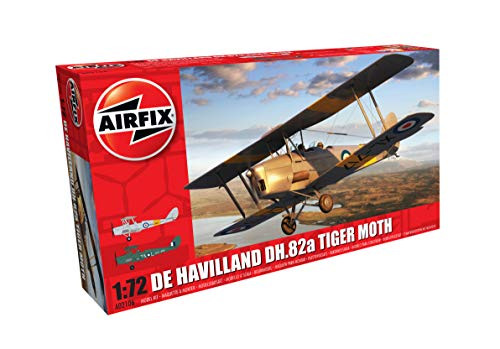
Airfix De Havilland DH.82a Tiger Moth 1:72 Military Aviation Plastic Model Kit A02106
Was:
$75.88
Now:
$37.94

Airfix North American F-51D Mustang 1:48 Military Aviation Plastic Model Kit A05136
Was:
$106.88
Now:
$53.44

Airfix Supermarine Spitfire F MK XVIII 1:48 WWII Military Aviation Plastic Model Kit A05140
Was:
$135.52
Now:
$67.76